
SeaLife SportDiver S Review — A Cheaper Sealife Dive Case, But Is 100 ft Enough?
SeaLife has added a new model to its dive case lineup: the SportDiver S. It is a more compact, less expensive version of the original SportDiver that I reviewed on this blog. SeaLife currently lists it at $249.95. The main trade-off is a shallower depth rating.
The SportDiver S is rated to 100 ft (30 m), 30 ft (10 m) less than the original. Here is what changed, what stayed the same, and which kinds of dives suit this housing.
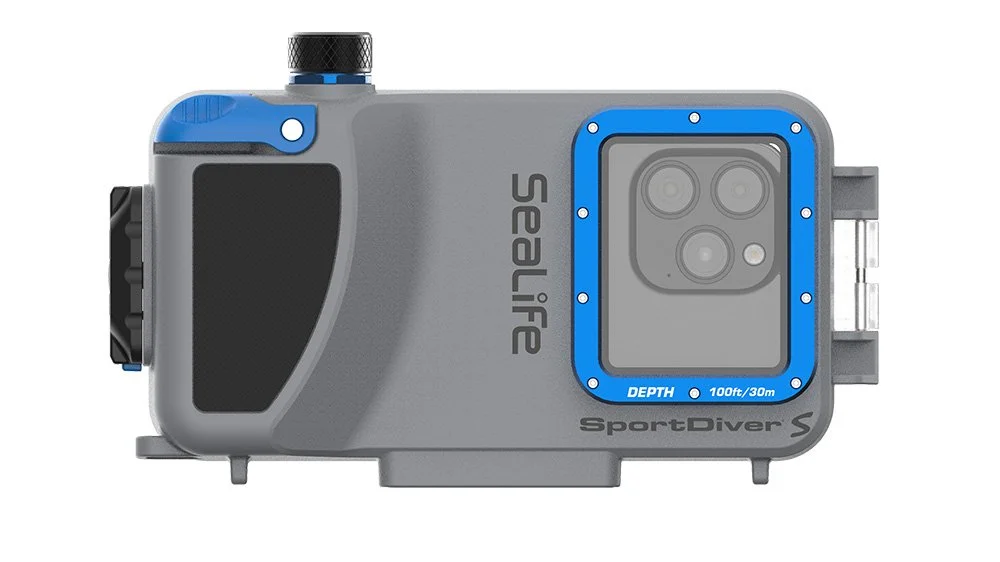
SeaLife SportDiver S housing with blue accents and a 100 ft (30 m) depth rating.
In a Rush? Pros and Cons of the SeaLife SportDiver S
In a rush? Here is a concise list of pros and cons for the SeaLife SportDiver S.
- Lower list price than the original SportDiver
- Fits many iPhone and Android models; check SeaLife's fit guide for your exact phone
- Compact design that is easier to pack for travel
- Wrist lanyard, Moisture Muncher, and leak detection system included
- Compatible with SportDiver filters, lenses, and lights
- Three 1/4-20 mounts for lights and other accessories
- Free SportDiver app for iOS and Android
- 100 ft (30 m) depth rating leaves little margin on dives approaching 30 m
- Requires the SportDiver app and Bluetooth connection
- Bluetooth module and AAA batteries add components to manage
- Vacuum pump and pre-dive leak test take additional setup time
- Moisture Muncher desiccant needs periodic replacement
- No touchscreen access; controls run through buttons and the app
- Some native camera settings and lenses may be unavailable in the app
What Is New: SportDiver S vs the Original SportDiver
The SportDiver S is positioned as the compact, travel-friendly option in the SeaLife lineup. Here is how it compares to the original SportDiver.
The S model saves you some bucks and gives you one extra tripod mount. The weight is nearly identical. The dimensions are slightly more compact. But you lose 30 ft (10 m) of depth rating. That is a trade-off I would not make, and I will explain why below.
| Feature | SportDiver S | SportDiver |
|---|---|---|
| SeaLife list price | $249.95 | $299.95 |
| Depth rating | 100 ft (30 m) | 130 ft (40 m) |
| Weight | 22.6 oz (641 g) | 22.5 oz (639 g) |
| Size | 8.4 × 4.9 × 2.2 in | Larger housing |
| Controls | SportDiver app and Bluetooth | SportDiver app and Bluetooth |
| Power | 2 AAA batteries | 2 AAA batteries |
| Phone fit | Check SeaLife's model guide | Check SeaLife's model guide |
| Tripod mounts | Three 1/4-20 | Two 1/4-20 |
| Leak check | Vacuum and moisture sensors | Vacuum and moisture sensors |
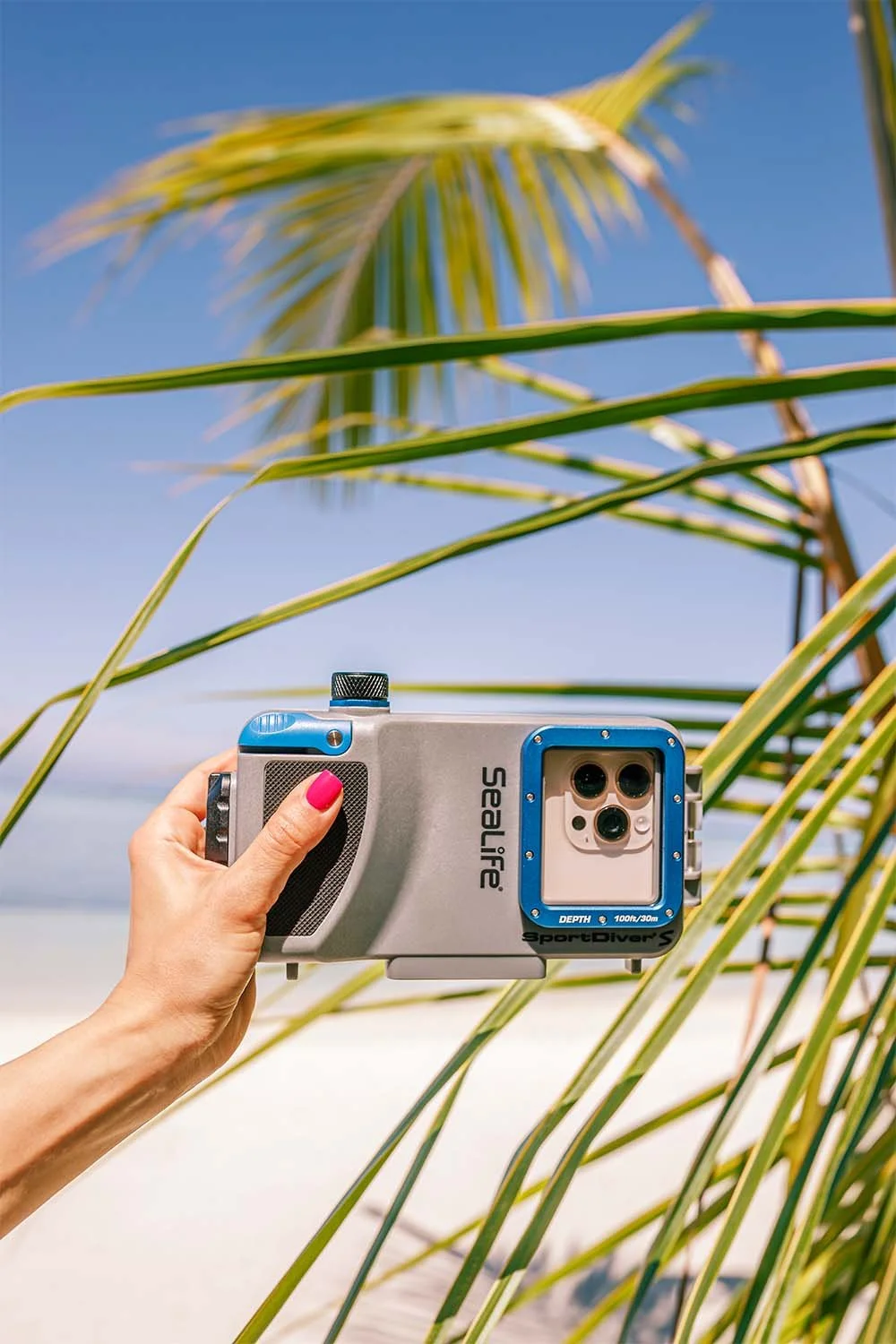
SeaLife SportDiver S housing in a beach setting.
Key Features and Benefits
Wide Phone CompatibilityThe SportDiver S supports many iPhone and Android models, but fit varies by phone; the iPhone 17 Pro Max requires the SportDiver Ultra. SeaLife provides a fit guide on their website where you can check if your phone is compatible. The internal dimensions are 6.49 x 3.15 x 0.38 in (165 x 80 x 9.7 mm). That is generous enough to fit most modern smartphones.
Build Quality
Like the original, the SportDiver S is constructed from polycarbonate with stainless steel and hard-anodized aluminum hardware. The lens port is optical glass with an anti-reflective coating on the inner surface. SeaLife has consistently built solid housings. That has not changed here.
Physical Button Controls
The sealife dive case features a large shutter lever, a mode button and rear control buttons for zoom, focus, playback and camera settings. SeaLife says the buttons are large enough to operate while wearing gloves. This is a plus if you are diving in cold water.
Color Correction Filters
Three optional removable color correction filters are available: red, magenta and yellow. These can be attached or removed while underwater. Each filter comes with a safety tether to prevent loss. The lens port is the same size as previous SportDiver models. That means all existing SportDiver filters and lens accessories are compatible.
Sea Dragon Light Compatibility
The SportDiver S has three 1/4-20 tripod mounts. That is one more than the original. This allows you to mount Sea Dragon lights, handles and other accessories. SeaLife recommends using an attached light source for best results. That is good advice — lighting is crucial for any underwater footage, especially below 30 ft (10 m) where natural light starts to drop off.
Leak Avoidance System
The housing includes a vacuum-based leak avoidance system. Before entering the water you pump out remaining air, then the case runs a 3.5-minute pressure test. A green LED indicates the vacuum is holding. A flashing red LED means a leak was detected. There is also a water-contact moisture sensor as a second line of defense. Additionally, the SportDiver S includes a Moisture Muncher desiccant to absorb excess humidity inside the housing.
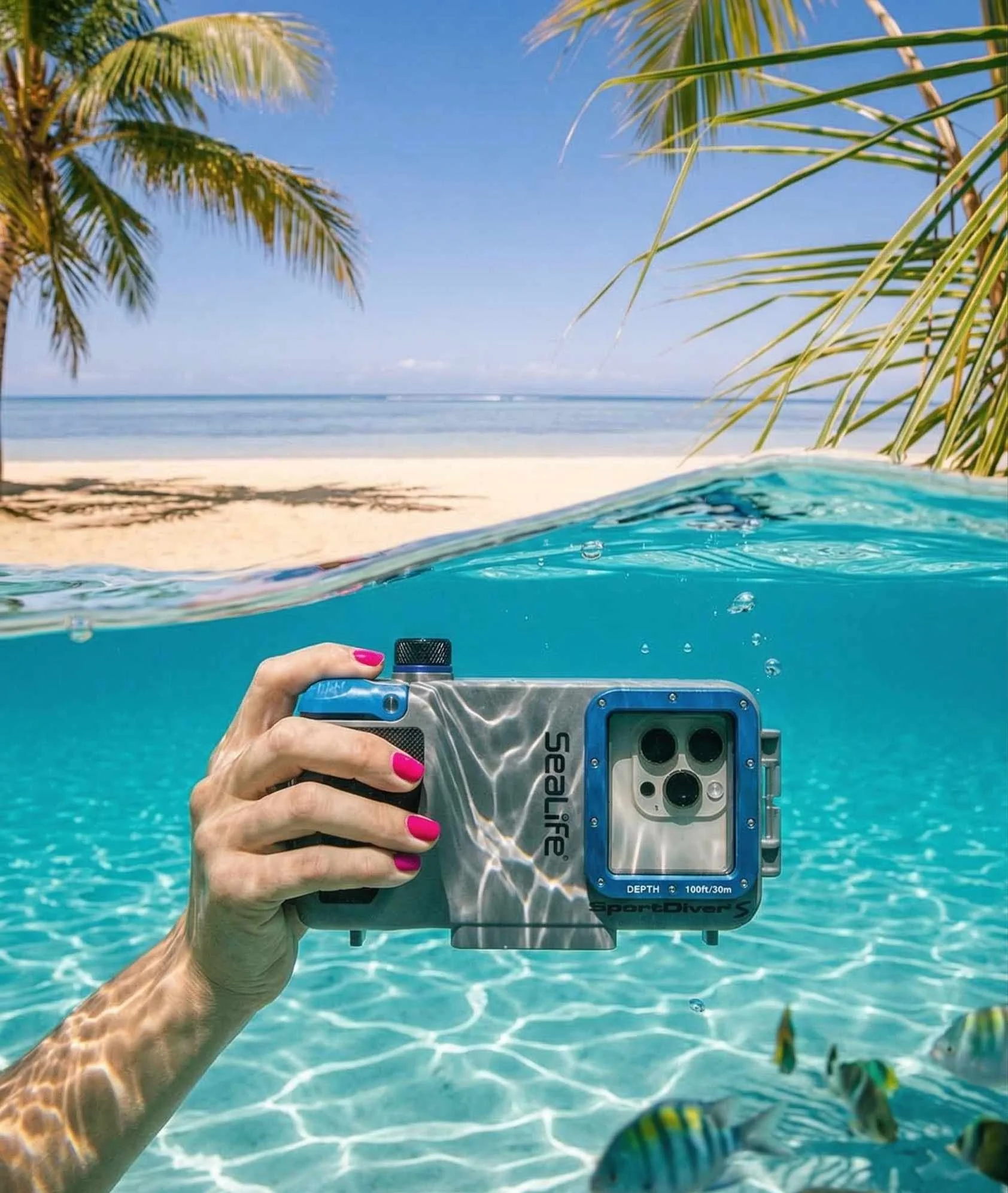
Blue is the new accent color of the SeaLife SportDiver S case.
The Same Old Shortcomings
My original SportDiver review covered the trade-offs of SeaLife’s approach. The S keeps the same basic system.
The App Requirement
Photography runs through the SportDiver app, which pairs with the housing by Bluetooth. That gives the physical buttons a clear job, but it also means you depend on SeaLife maintaining the app for new phones and operating-system updates. Check the app’s current camera features for your phone before a trip.
Electronic Components
The Bluetooth module, vacuum sensor, moisture sensor, LEDs, and two AAA batteries all need to work. Bring spare batteries and check the housing before every dive.
Sealing and Leak Check
After inserting the phone and closing the case, you use the supplied vacuum pump and wait for the pre-dive pressure check. This adds setup time compared with a simple mechanical housing, but the leak warning is useful.
Moisture Muncher Replacement
The included desiccant absorbs humidity inside the case. Replace it when SeaLife’s instructions indicate it is spent, and keep a spare if you are traveling for several days.
Is 100 ft (30 m) Enough for Your Dives?
The SportDiver S is rated to 100 ft (30 m), while the original SportDiver is rated to 130 ft (40 m). The S can be used for dives within its rating, but I prefer a housing with headroom beyond my planned maximum depth. On a dive approaching 30 m, this case gives me little room for an unplanned descent.
For snorkeling and shallower scuba dives, the 30 m rating is ample. If you regularly dive deeper or want more margin, choose a housing with a higher depth rating. Always follow your training, dive plan, and the housing maker’s instructions.
For more on this trade-off, see my guide to dive case depth ratings.
Who Is This SeaLife Dive Case For?
The SportDiver S makes sense for snorkelers, swimmers, and scuba divers whose planned depth stays well within 30 m and who prefer physical camera controls. It is smaller and less expensive than the original SportDiver, and its leak check adds reassurance before entry.
It is less attractive if you want direct touchscreen access, do not want to depend on an app and Bluetooth, or often dive close to its depth limit. Check your exact phone model against SeaLife’s compatibility guide before buying.
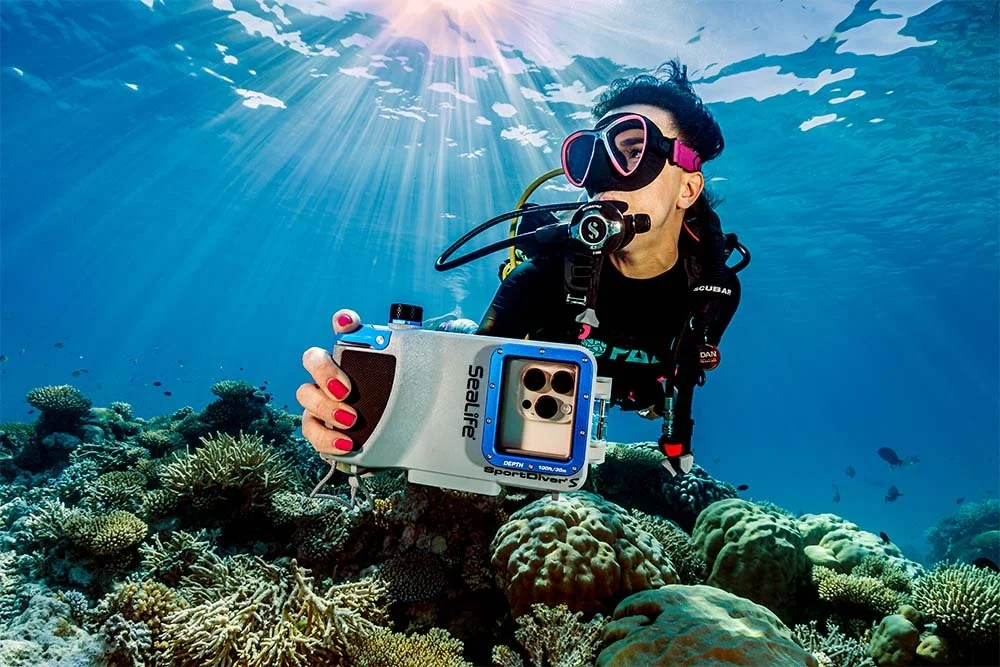
A Diver descending with the SportDiver S. Source: www.sealife-cameras.com
Better Alternatives
If touchscreen access matters more to you than physical buttons, see my DIVEVOLK SeaTouch 4 Max review. It uses your phone’s native camera app, needs no Bluetooth connection, and is rated to 196 ft (60 m).
The ProShot Dive Case is another touchscreen option rated to 130 ft (40 m). Its fit and features vary by model, so compare the iPhone and Android versions before choosing one.
Pricing and Availability
SeaLife lists the SportDiver S at $249.95 as of October 2026. Amazon prices can change. Use the Buy on Amazon button below to check the current listing for this exact model.
Final Thoughts and Conclusion
The SeaLife SportDiver S is a smaller, less expensive SportDiver. Its physical controls, included leak detection, and support for SeaLife accessories are genuine strengths. It can be a good fit for snorkeling and scuba dives comfortably within its 100 ft (30 m) rating.
My reservations are the app and Bluetooth dependency, the extra vacuum-check step, and the narrower depth range than the original SportDiver. If your dive plans approach 30 m, I would choose a housing with a higher rating. Check phone compatibility and current Amazon pricing before deciding.
For direct touchscreen access, see my DIVEVOLK SeaTouch 4 Max review or the ProShot Dive Case review.
Would the SportDiver S suit the depths you normally dive? Let me know in the comments.